
Gwinnett County has transformed over the past few decades from a largely rural area into one of Georgia’s most populous and economically vibrant regions. With that growth has come an explosion of traffic. Nearly a million people now call Gwinnett home, and the highways crisscrossing the county carry an enormous volume of vehicles every single day. Unfortunately, not all of these roadways are equally safe.
Certain highway exits in Gwinnett County have earned reputations as accident hotspots. Local drivers know which intersections make them grip the steering wheel a little tighter. Law enforcement and emergency responders can tell you which exits generate the most calls. If you regularly drive through Gwinnett County, understanding where these dangerous exits are located and what makes them so treacherous could literally save your life.
Why Some Exits Are More Dangerous Than Others
Before diving into specific exits, it’s worth understanding what makes certain locations particularly hazardous. Highway exits don’t become dangerous by accident. They share common characteristics that create conditions ripe for collisions.
Poor design tops the list. Some exits were built decades ago when traffic volumes were a fraction of what they are today. Short merge lanes that made sense in 1975 are wholly inadequate for current traffic levels. Tight curves that force drivers to slow dramatically create bottlenecks. Confusing signage leaves drivers making last-second lane changes as they realize they’re about to miss their exit.
High traffic volume exacerbates every other problem. An exit that might be manageable with light traffic becomes a nightmare during rush hour. When thousands of vehicles are trying to navigate the same stretch of road simultaneously, the margin for error shrinks dramatically. One driver’s mistake can trigger a chain reaction affecting dozens of vehicles.
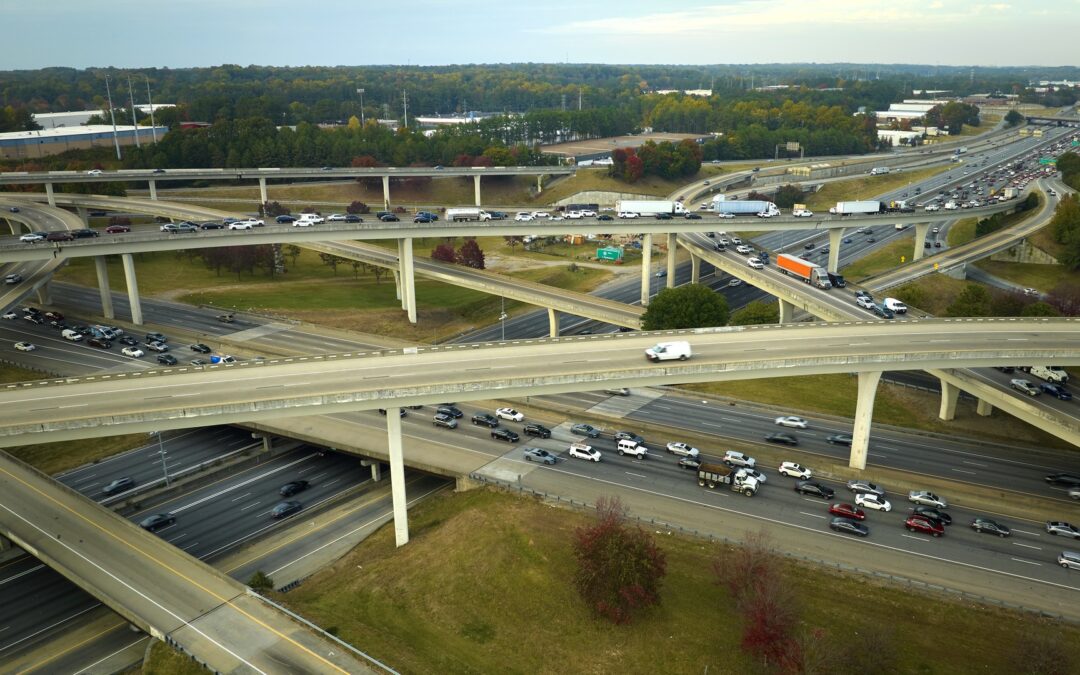
Complex interchange designs create situations where multiple traffic streams cross paths. When highways intersect, exit ramps merge with surface streets, and acceleration lanes compete with deceleration lanes all in the same area, confusion and conflict are inevitable. Drivers unfamiliar with these complicated interchanges often make dangerous maneuvers as they try to figure out where they need to be.
Commercial development around exits brings heavy truck traffic, delivery vehicles making frequent stops, and shoppers unfamiliar with the area. The combination of local traffic trying to access businesses and through traffic trying to stay on the highway creates dangerous mixing zones where different types of vehicles with different destinations share limited space.
Speed differentials between highway traffic and exiting vehicles create collision risks. When cars are traveling 70 mph on the highway and need to slow to 25 mph for a tight exit ramp, rear-end collisions become much more likely. Add in drivers who don’t slow down appropriately or who misjudge distances, and you have a recipe for serious accidents.
I-85 and Pleasant Hill Road (Exit 104)
This exit serves as a major access point to the Pleasant Hill Road corridor, one of Gwinnett County’s busiest commercial areas. The intersection beneath the overpass handles an enormous volume of traffic from vehicles exiting the highway and from surface street traffic trying to navigate the area.
The danger here stems from multiple factors converging in one location. The exit ramps dump significant traffic onto Pleasant Hill Road, which is already congested with local traffic heading to shopping centers, restaurants, and businesses. The traffic signals at the bottom of the ramps struggle to keep up with demand, leading to backups that extend onto the exit ramps themselves during peak hours.
Drivers exiting I-85 often don’t anticipate how quickly traffic backs up. They come off the highway at speed, expecting a clear exit, and suddenly find themselves having to brake hard as they encounter stopped or slow-moving vehicles ahead. Rear-end collisions are common here, especially during afternoon rush hour when the backup is most severe.
The interchange also sees frequent sideswipe collisions as drivers jockey for position in the turn lanes at the bottom of the ramps. Multiple lanes merge together, and drivers who aren’t paying close attention or who make aggressive lane changes contribute to the accident rate. The presence of large commercial vehicles making deliveries to nearby businesses adds another complication, as these trucks need more space to maneuver and take longer to stop.
Weather makes this exit even more dangerous. When it rains, the slight grade of the exit ramps combined with oil buildup on the pavement creates slick conditions. Drivers who don’t reduce their speed appropriately for wet conditions are at high risk of losing control, especially when they brake suddenly due to backed-up traffic.
I-85 and Jimmy Carter Boulevard (Exit 99)
Jimmy Carter Boulevard is one of Gwinnett County’s most heavily traveled roads, and its interchange with I-85 is correspondingly busy and hazardous. This exit serves both local traffic and travelers heading to destinations throughout the county, resulting in a constant flow of vehicles entering and exiting the highway.
The configuration of this interchange creates several danger zones. Northbound I-85 traffic exiting onto Jimmy Carter Boulevard faces a sharp curve followed by a quick merge into surface street traffic. Drivers who take this curve too fast risk losing control, while those who navigate it appropriately still must immediately deal with traffic signals and cross traffic.
The southbound exit presents different but equally serious hazards. The ramp deposits traffic into an area where vehicles are trying to turn left across multiple lanes to access businesses on the opposite side of Jimmy Carter Boulevard. These left-turning vehicles conflict with through traffic and with vehicles trying to turn right out of parking lots. The result is a chaotic mixing zone where accidents happen frequently.
Large trucks frequently use this exit to access distribution facilities and industrial areas nearby. These commercial vehicles need more time and distance to slow down and stop, but they’re often mixed with passenger vehicles whose drivers don’t always give trucks adequate space. The speed differential between a loaded truck trying to slow for the exit and passenger vehicles still at highway speed creates rear-end collision risks.
I-985 and Spout Springs Road (Exit 8)
As I-985 heads north through Gwinnett County, the interchange at Spout Springs Road stands out as particularly problematic. This area has seen rapid residential and commercial development in recent years, but the infrastructure hasn’t kept pace with growth. The result is an exit that was never designed to handle current traffic volumes.
The geometry of this interchange creates inherent dangers. The exit ramps are relatively short, giving drivers limited space to decelerate from highway speeds. When traffic backs up from the traffic signal at the bottom of the ramp, which happens frequently during morning and evening commutes, vehicles can be stopped well up onto the exit ramp itself. Drivers coming off I-985 at 65 mph don’t always see this backup in time, leading to rear-end crashes.
The northbound exit is especially notorious among locals. The ramp curves to the right, limiting sight distance for drivers trying to gauge traffic conditions ahead. By the time they can see that traffic is backed up, they may not have sufficient distance to stop safely. During wet weather, this curved ramp becomes even more treacherous as vehicles occasionally slide when drivers brake hard.
Spout Springs Road itself is narrow for the volume of traffic it carries. When vehicles exit the highway, they enter a two-lane road that’s often congested with local traffic. Left turns from the exit ramps across opposing traffic are particularly hazardous. Drivers waiting to turn left block the right lane, backing up traffic behind them and creating frustration that sometimes leads to risky passing maneuvers.
The Area Is Developing Fast Making It More Congested
The surrounding development has created numerous driveways and side streets that intersect with Spout Springs Road near the interchange. Vehicles entering and exiting these access points add to the complexity. Drivers focused on navigating the highway exit may not notice vehicles pulling out from shopping centers or neighborhoods, leading to T-bone style collisions.
State Route 316 and Harbins Road (Exit 8)
SR 316 serves as a major east-west corridor through Gwinnett County, and the Harbins Road exit handles traffic from residential areas, schools, and commercial development. This exit has become increasingly dangerous as the surrounding area has grown but the infrastructure has remained largely unchanged.
The westbound exit ramp here is short and dumps traffic directly into a busy intersection. Vehicles coming off SR 316 must immediately navigate a traffic signal while dealing with cross traffic from Harbins Road. There’s minimal buffer space between the highway and the intersection, giving drivers little time to assess the situation and react appropriately.
School traffic makes this exit particularly hazardous during morning and afternoon hours. Several schools are located in the Harbins Road area, and parents dropping off or picking up students create significant congestion. Vehicles stopped in turn lanes or making unexpected stops to let children out contribute to rear-end collisions. Teenage drivers, who are statistically more likely to be involved in accidents, also frequent this area.
The eastbound entrance ramp presents its own set of dangers. The acceleration lane is short, forcing drivers to merge into fast-moving SR 316 traffic quickly. During peak hours, gaps in traffic are minimal, and drivers trying to merge often have to force their way in or wait for an opening. Some drivers attempt to merge while still going too slowly, creating speed differentials that can result in serious collisions.
Commercial trucks accessing warehouses and distribution centers in the area use this exit regularly. The turning radius required for large trucks combined with limited space at the intersection creates conflicts with passenger vehicles. Trucks making wide turns sometimes encroach into adjacent lanes, and impatient drivers trying to squeeze past them put themselves at risk.
US 29 and Langley Drive (Multiple Access Points)
US 29, also known as the University Parkway in parts of Gwinnett County, doesn’t have traditional highway exits in some sections but rather multiple at-grade intersections that function similarly to exits. The Langley Drive area, with its cluster of access points, is particularly dangerous.
This stretch of US 29 carries highway-level traffic volumes but intersects with numerous surface streets and driveways. Vehicles traveling at 55 mph must contend with traffic entering from shopping centers, vehicles making left turns across opposing traffic, and drivers unfamiliar with the area making sudden stops or lane changes.
The proximity of multiple turn lanes and access points creates confusion. Drivers in through lanes suddenly find vehicles slowing or stopping to turn. Drivers trying to turn left from side streets face difficult decisions about when it’s safe to cross multiple lanes of fast-moving traffic. The accident rate in this corridor reflects these challenges, with collisions occurring regularly.
Retail development along this stretch means there’s constant turning traffic. Shoppers entering and exiting parking lots cross paths with through traffic multiple times. Many drivers are looking for specific businesses and may slow unexpectedly or make sudden turns. GPS navigation sometimes directs unfamiliar drivers to make turns without giving them adequate warning, leading to last-second maneuvers that catch other drivers off guard.
Evening lighting in this area is inconsistent. Some sections are well-lit while others fall into shadows. This variation makes it harder for drivers to see vehicles, pedestrians, and traffic signals clearly. The risk of collisions increases significantly after dark, particularly in areas where parking lot entrances are poorly lit.
What Makes These Exits So Dangerous During Rush Hour
Morning and evening commutes transform already dangerous exits into absolute nightmares. The volume of traffic increases dramatically, patience decreases, and the margin for error shrinks to almost nothing. Understanding the specific rush hour dynamics can help you navigate these exits more safely.
Traffic volumes during peak hours can be three to four times higher than during midday periods. Every lane is full, gaps between vehicles are minimal, and the flow of traffic becomes less predictable. When one person brakes, the effects ripple backward, creating stop-and-go conditions that are inherently dangerous.
Aggressive driving becomes more common during rush hour. Drivers running late for work or eager to get home after a long day take risks they might not take otherwise. They follow too closely, change lanes without adequate gaps, and try to beat red lights. This aggressive behavior increases accident risk for everyone on the road.
The mix of commuters and commercial vehicles during rush hour creates speed mismatches. Large trucks accelerate slowly and need more distance to stop, while passenger vehicles dart around them. Drivers unfamiliar with daily commute patterns may be in the wrong lane or moving too slowly for the flow of traffic, creating obstacles that others must navigate around.
Fatigue plays a role, especially during evening rush hour. Drivers who have been working all day are tired, less alert, and slower to react to hazards. Morning commuters may not be fully awake yet. This decreased alertness during high-traffic periods is a dangerous combination.
Tips for Navigating Dangerous Exits Safely
Knowing where dangerous exits are located is only the first step. You also need strategies for navigating them safely. These practical tips can reduce your risk when you must use one of Gwinnett County’s high-accident exits.
Plan ahead whenever possible. If you know you need to take a dangerous exit, get in the appropriate lane well before the exit itself. Don’t wait until the last minute and then try to force your way across multiple lanes. Anticipating the exit gives you time to position yourself safely and reduces the chance you’ll make a dangerous maneuver.
Reduce your speed earlier than you think necessary. Exit ramps that curve sharply or have short deceleration lanes require lower speeds than you might expect. It’s better to slow down too much and get honked at than to carry too much speed and lose control or rear-end stopped traffic.
Increase your following distance when approaching known dangerous exits. Give yourself extra space between your vehicle and the one ahead. This buffer gives you more time to react if the vehicle ahead stops suddenly. Remember that the standard two-second following distance isn’t enough in high-risk areas—aim for three or four seconds.
Stay alert for backed-up traffic on exit ramps. Some exits have traffic that backs up onto the highway itself during peak hours. Watch your mirrors and be prepared to slow or move over if you see vehicles stopped ahead on the exit ramp. Rear-ending a stopped vehicle because you didn’t notice traffic backing up is a common and preventable collision type.
More Tips To Help Keep You Safe
Avoid distractions completely when navigating dangerous exits. Put your phone away, stop eating, and pause conversations. These high-risk areas demand your full attention. Even a two-second glance at your phone is enough time to miss critical information about what’s happening ahead of you.
Use your turn signals early and keep them on throughout your exit. Signals communicate your intentions to other drivers and give them time to adjust. Some drivers are reluctant to use turn signals because they worry other drivers will speed up to close gaps, but signaling is still the safer choice.
Don’t trust that other drivers will follow the rules. Just because you have the right of way doesn’t mean someone won’t pull out in front of you. Drive defensively and be prepared for others to make mistakes. Assume the worst about other drivers’ behavior and you’ll rarely be caught off guard.
When Accidents Happen at Dangerous Exits
Despite your best efforts to drive safely, accidents at these high-risk exits remain common. If you’re involved in a collision at one of Gwinnett County’s dangerous exits, knowing what to do can protect your health and legal rights.
Move your vehicle out of traffic if possible and it’s safe to do so. Georgia’s “Steer It, Clear It” law encourages drivers to move vehicles from travel lanes after minor accidents to prevent secondary collisions. However, don’t move vehicles if anyone is injured or if the vehicles can’t be safely moved.
Call 911 immediately. Even if the accident seems minor, having police respond creates an official record of the collision. The police report will document the location, conditions, and officer’s assessment of what happened. This report becomes crucial evidence if you later file an insurance claim or lawsuit.
Document everything at the scene. Take photos of all vehicles involved, damage, skid marks, traffic signals, signage, and the overall scene. These photos capture conditions that may not be accurately described in police reports. Take photos from multiple angles and distances to provide context.
Get information from witnesses. People in other vehicles or pedestrians may have seen what happened. Their testimony can be invaluable, especially if the other driver disputes fault. Get names, phone numbers, and addresses, and ask if they’d be willing to provide a statement about what they witnessed.
After the Scene Of The Accident
Seek medical attention even if you feel fine. Adrenaline can mask pain and injury symptoms immediately after an accident. Some injuries like whiplash or concussions may not be apparent for hours or even days. Getting checked by a medical professional creates documentation linking your injuries to the accident.
Be careful what you say to insurance adjusters. The other driver’s insurance company is not your friend. They’re looking for ways to minimize or deny your claim. Don’t give recorded statements without first consulting a personal injury attorney. Don’t admit fault or downplay your injuries.
Consult a personal injury attorney, especially if you’ve been seriously hurt or if there’s any dispute about fault. Accidents at known dangerous exits may have additional liability considerations. Perhaps the government entity responsible for maintaining the exit should bear some responsibility due to poor design or inadequate maintenance. An experienced attorney can evaluate all potential sources of compensation.
The Bottom Line on Staying Safe
Gwinnett County’s dangerous highway exits aren’t going to become safe overnight. Infrastructure improvements take years of planning and millions of dollars in funding. Until these problem areas are redesigned and rebuilt, they’ll continue generating accidents at alarming rates.
Your best protection is awareness and caution. Know where these dangerous exits are located. Adjust your driving behavior when you approach them. Give yourself extra time, extra space, and extra attention when navigating high-risk areas.
If you regularly commute through Gwinnett County, consider alternate routes that avoid the worst exits. Yes, it might add a few minutes to your drive. But arriving safely is worth more than saving five minutes. Sometimes the slightly longer route is actually the smarter choice.
Stay informed about traffic conditions through apps like Waze or Google Maps. These tools can alert you to accidents, construction, or unusual congestion that might make dangerous exits even worse than usual. Real-time information allows you to make better decisions about when and how to navigate problem areas.
Remember that being right doesn’t prevent injuries. You might have the right of way, but that won’t protect you if another driver runs a red light. Defensive driving means assuming others will make mistakes and positioning yourself to avoid the consequences of those mistakes.
Gwinnett County’s growth shows no signs of slowing. More residents mean more traffic, which means these dangerous exits will likely become even more hazardous before improvements are made. Until the infrastructure catches up with the population, smart, cautious driving is your best defense against becoming another accident statistic.
Frequently Asked Questions
What should I do if I see an accident happening at one of these dangerous exits?
If you witness an accident at a dangerous exit, your first priority is ensuring you don’t become part of a secondary collision. Slow down carefully and be aware of other vehicles around you that may brake suddenly. If you can safely pull over without blocking traffic or putting yourself in danger, do so. Call 911 to report the accident, providing specific location information including the highway, exit number, and direction of travel. If you stop to help, park well away from the accident scene and watch for oncoming traffic. Many secondary accidents happen when good Samaritans stop to help but don’t position themselves safely. Never stop in a travel lane or on an exit ramp unless your vehicle is disabled. If you witnessed what caused the accident, wait for police to arrive and offer to provide a witness statement. Your testimony could be crucial in determining fault. Take photos or video if you can do so safely, but don’t put yourself at risk to capture footage. If conditions are too dangerous to stop, continue driving and call 911 to report the accident and provide your contact information in case investigators need witness statements later.
Can I hold the government responsible if a poorly designed exit caused my accident?
Potentially, yes, but these claims are complex and face significant legal hurdles. Georgia law does allow claims against government entities for dangerous road conditions under certain circumstances. However, governments have sovereign immunity protections that make these cases much harder than standard negligence claims. To succeed in a claim against a city, county, or the state of Georgia for a dangerous exit design, you’d need to prove several elements. First, you must show that the government had actual or constructive knowledge of the dangerous condition. This means they either knew about it or should have known about it through reasonable inspection and maintenance. Second, you must prove the government had adequate time to fix the problem but failed to do so. Third, you need to demonstrate that the dangerous condition was the proximate cause of your accident. Even if you can prove these elements, there are strict notice requirements and short deadlines for filing claims against government entities. You typically must file an ante litem notice within six to twelve months depending on the entity, which is much shorter than the standard two-year statute of limitations for personal injury claims. These cases often require expert testimony from traffic engineers who can testify about design defects and whether the exit meets applicable safety standards. Given the complexity and strict deadlines involved, anyone considering a claim based on dangerous road design should consult an attorney immediately after their accident.
Are certain times of day more dangerous at these exits, and should I adjust my route during those times?
Absolutely. Accident data consistently shows that certain times of day are significantly more dangerous at high-risk exits. Morning rush hour, typically between 7:00 AM and 9:00 AM on weekdays, sees a spike in accidents as commuters hurry to work. Evening rush hour, from 4:30 PM to 6:30 PM, is often even worse as tired drivers head home and traffic volumes peak. Friday afternoons are particularly hazardous as weekend travel combines with regular commuter traffic. Weather conditions dramatically affect safety at specific times. Rain during rush hour creates the worst possible conditions at dangerous exits. The first rain after several dry days is especially treacherous because oil and fluids that have accumulated on the road surface create slick conditions until the rain washes them away. If you have flexibility in your schedule, traveling outside peak hours significantly reduces your risk. Leaving for work thirty minutes earlier or later can mean the difference between navigating calm traffic and fighting through congested, aggressive conditions at dangerous exits. For unavoidable rush hour driving, consider alternate routes even if they take longer. An extra ten minutes on surface streets may be safer than saving time by using a dangerous exit during peak congestion. Many GPS apps now offer route options that avoid specific exits or show which routes have fewer reported accidents. Use these tools to make informed decisions about the safest path to your destination, especially during high-risk times.