
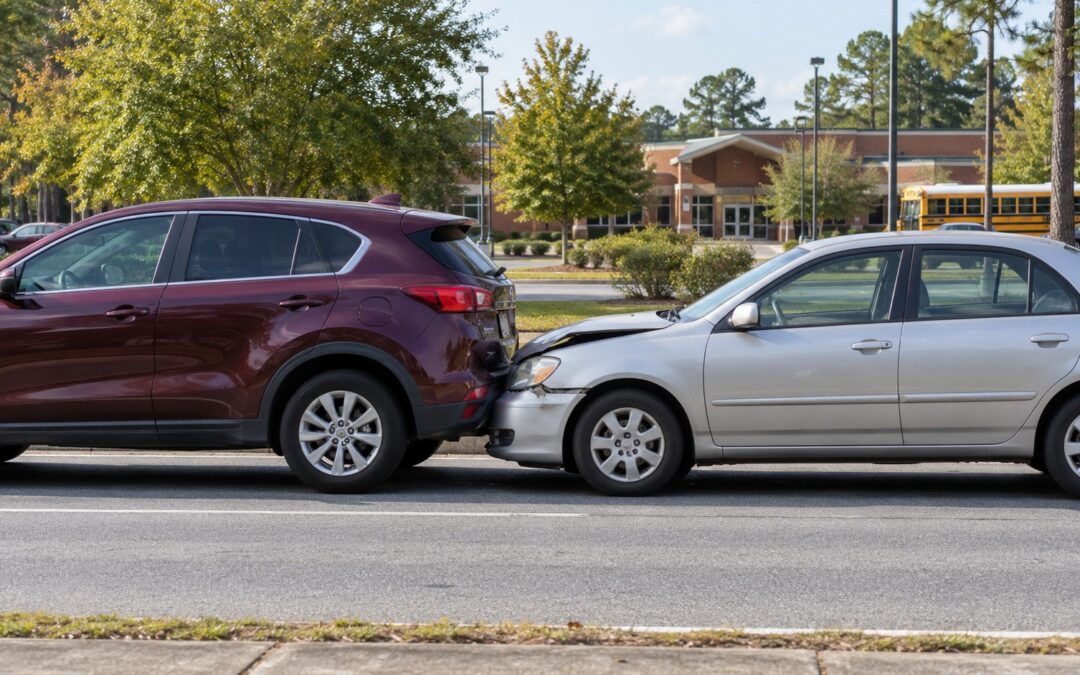
A crash caused by a teenage driver raises questions that ordinary car accident claims do not. Most teen drivers own little or nothing in their own names. They often drive a car titled to a parent and insured under a parent’s policy. Injured people and their families naturally want to know who is actually responsible for paying.
Georgia law answers that question through several overlapping rules. The teen driver can be held responsible for his or her own negligence. In many cases, a parent or the owner of the vehicle can be held responsible as well. Other people, such as an employer or an adult who supplied alcohol, may share the blame.
This article walks through those rules. It covers teen licensing laws, the family purpose doctrine, negligent entrustment, parental liability, insurance coverage, and the deadlines that apply to injury claims. Whether you were hurt by a teen driver or you are the parent of one, understanding these rules can help you make better decisions.
Georgia’s Rules for Teen Drivers
The state uses a graduated licensing system created by the Teenage and Adult Driver Responsibility Act, known as TADRA. This system gives young drivers more privileges as they gain experience. Violating these rules does not automatically prove fault for a crash. Still, the restrictions often become relevant evidence when a claim is investigated.
Teens may apply for an instructional permit at age 15. The permit must be held for at least one year and one day before the teen can apply for a provisional Class D license at 16. Applicants must also complete at least 40 hours of supervised driving, including at least 6 hours at night.
Joshua’s Law adds driver education requirements for applicants under 18. The law is named for Joshua Brown, a Georgia teenager who died in a crash in 2003. Teens who do not meet these training requirements face a later path to licensing.
Once a teen receives a Class D license, several restrictions apply until he or she turns 18:
- No driving between midnight and 5:00 a.m., with no exceptions.
- During the first six months, only immediate family members may ride as passengers.
- In the second six months, only one passenger under 21 who is not an immediate family member may ride along.
- After the first year, no more than three passengers under 21 who are not immediate family members may ride along.
A parent or guardian signs off on the teen’s license application. Under Georgia’s licensing rules, the person who signs can ask to have the license revoked at any time before the teen turns 18. Parents should understand that this gives them ongoing control, and that control can matter in a later liability dispute.
Georgia’s hands-free law applies to all drivers. Teens with a permit or Class D license face even tighter limits on using a wireless device behind the wheel. Phone records frequently become important evidence after a crash involving a young driver.
Can the Teen Driver Be Held Personally Liable?
Yes. A teenager who drives negligently and causes a crash can be held legally responsible for the resulting harm. Georgia law gives children under 13 immunity from tort suits, but that protection does not reach teens old enough to drive.
Inexperience is not a defense. If a 16-year-old runs a red light, follows too closely, or speeds, that teen has broken the same traffic laws that bind every driver. Those violations can be strong evidence of negligence. The injured person must still prove that the teen was negligent and that the negligence caused the injuries.
Suing a minor does involve some special procedures. Georgia’s civil procedure rules include specific requirements for serving a lawsuit on a minor. Courts also take extra steps to protect a minor’s interests during litigation.
As a practical matter, a teen driver rarely has the money to pay a serious injury claim. Recovery usually comes from insurance and from adults who may be legally responsible. That is why the doctrines discussed below matter so much.
The Family Purpose Doctrine
Georgia is one of a limited number of states that recognize the family purpose doctrine. Under this rule, the person who provides a car for family use can be held responsible when a family member drives it negligently. The adult does not need to be in the car or do anything wrong personally.
Courts generally look at four questions:
- Did the defendant have authority and control over the vehicle?
- Was the vehicle made available for family use?
- Did the driver belong to the defendant’s immediate household?
- Was the vehicle being driven with the defendant’s permission or acquiescence for a purpose for which it was provided?
Title alone does not decide the issue. Georgia courts focus on who actually had authority and control over the car. A parent who buys a car for a teen, pays for it, and sets the rules for its use may be covered by the doctrine even if the title is in someone else’s name.
Permission can be express or implied. A parent who hands over the keys every weekend has given permission even without saying so each time.
The doctrine can sometimes reach situations where the teen lets a friend drive. Georgia courts have applied it when a family member was in the car and still had control over how it was used. Courts have been less willing to apply it when the family member was not in the car at all. These cases turn heavily on their facts.
The doctrine has limits. It generally does not apply if the teen took the car without permission or used it for a purpose the parent had clearly forbidden. Parents sometimes raise these defenses, and the evidence about household rules and past practice becomes important.
Negligent Entrustment
This separate theory, known as negligent entrustment, is based on the adult’s own conduct. It applies when someone lends a vehicle to a driver they knew, or should have known, was incompetent or reckless. The injured person must also show that the driver’s negligence caused the crash.
This claim focuses on what the owner knew at the time. Evidence might include a teen’s prior crashes, speeding tickets, license suspensions, or known alcohol use. Allowing a teen to drive in violation of license restrictions may also be relevant.
Consider a parent who knows a teen recently totaled a car while texting. If that parent hands over the keys again with no changes, an injured person may argue the parent acted unreasonably. Negligent entrustment claims can also apply to grandparents, family friends, or anyone else who lends a car to a young driver.
Proving negligent entrustment requires more than showing the teen was young. Being newly licensed, by itself, usually is not enough. The claim depends on actual or constructive knowledge of a specific risk.
Georgia’s Parental Liability Statute
Many people assume Georgia has a law making parents automatically liable for anything their children do. That is not correct. Georgia’s parental liability statute is narrow.
Under that statute, a parent or guardian with custody and control of a child under 18 can be held liable for the child’s willful or malicious acts. Liability is capped at $10,000 plus court costs. The damages are limited to reasonable medical expenses and property damage.
Most car crashes involve carelessness rather than intentional misconduct. A teen who glances at a phone and rear-ends another car has acted negligently, not maliciously. For that reason, the statute rarely plays a major role in ordinary crash claims.
The statute expressly preserves other remedies, including the family purpose doctrine. An injured person does not have to choose between them. In a typical teen crash claim, the family purpose doctrine and insurance coverage do far more work than the parental liability statute.
Other Parties Who May Share Fault
A crash involving a teen driver does not always begin and end with the teen and the parents. Other parties may also bear responsibility.
Employers. Teens often drive for work, delivering food, running errands, or traveling between job sites. An employer can be held liable for an employee’s negligent driving when the employee was acting within the scope of employment. Personal commutes to and from work usually fall outside that rule, but there are exceptions.
People who furnish alcohol. Georgia law allows claims against someone who willfully, unlawfully, and knowingly sells or furnishes alcohol to a person under 21 while knowing that person will soon be driving. This can apply to businesses and to private individuals, including adults who host parties. These claims have strict requirements and must be evaluated carefully.
Other drivers. Teen drivers are not always the only ones at fault. Another driver may have been speeding, distracted, or impaired. Georgia allows fault to be divided among everyone who contributed to a crash.
Vehicle manufacturers and government entities. A defective part, such as faulty brakes or tires, may have contributed to the crash. In some cases, a dangerous road condition may be at issue. Claims against government entities in Georgia carry special notice requirements, with deadlines that can be much shorter than two years.
How Insurance Coverage Applies
Insurance is usually the main source of payment in a teen driver crash. Georgia requires drivers to carry at least $25,000 in bodily injury coverage per person, $50,000 per accident, and $25,000 for property damage. Those minimums are often far below the cost of a serious injury.
Teen drivers living at home are usually listed on a parent’s policy. Coverage questions can still arise. Insurers sometimes dispute whether a teen was a covered driver, whether the vehicle was listed on the policy, or whether an exclusion applies. Each policy’s language controls.
Several types of coverage may come into play:
- The liability coverage on the vehicle the teen was driving.
- Other household policies that may extend coverage to resident relatives.
- An umbrella policy, if the family carries one.
- The injured person’s own uninsured or underinsured motorist coverage.
Uninsured and underinsured motorist coverage is especially important. If the at-fault driver’s insurance is too small to cover your losses, your own policy may help make up the difference. Georgia law allows drivers to choose how this coverage interacts with the at-fault driver’s liability limits. Review your own policy to see which option you selected.
Parents of teen drivers should also review their coverage. Raising liability limits and adding an umbrella policy can help protect family assets if a teen causes a serious crash.
Comparative Fault and Filing Deadlines
Georgia follows a modified comparative fault rule. An injured person can recover damages as long as he or she is less than 50 percent at fault. The recovery is reduced by the injured person’s share of fault. Anyone found 50 percent or more at fault recovers nothing.
For example, suppose a jury finds total damages of $100,000 and assigns 20 percent of the fault to the injured person. The recovery would be reduced to $80,000. Insurance companies often try to shift blame to the injured person for exactly this reason.
Seat belt use has also become more important. Since Georgia’s 2025 tort reform legislation, evidence that an injured person was not wearing a seat belt can be admissible in many car accident cases. That evidence may affect how fault and damages are assessed.
Deadlines are strict. In most Georgia personal injury cases, a lawsuit must be filed within two years of the injury. Claims for property damage generally have a four-year deadline. Different rules can apply when the injured person is a minor, when a government entity is involved, or when a death occurs.
Missing a deadline can end a claim entirely. Talking with a lawyer early helps protect your rights.
Steps to Take After a Crash Involving a Teen Driver
The steps you take after a crash can affect your health and your claim. Consider the following:
- Call 911 and get medical attention, even if your injuries seem minor.
- Request a police report and write down the report number.
- Get the names of the driver, the vehicle owner, and any parents present, along with insurance information.
- Photograph the vehicles, the scene, road conditions, and any visible injuries.
- Collect contact information from witnesses.
- Keep records of medical treatment, missed work, and other expenses.
- Avoid giving a recorded statement to the other driver’s insurer before speaking with a lawyer.
- Do not post about the crash on social media.
Evidence in teen driver cases can disappear quickly. Phone records, vehicle data, and video footage from nearby businesses may be lost if no one acts to preserve them. An attorney can send preservation requests and investigate whether a parent, owner, employer, or other party shares responsibility.
Parents whose teen caused a crash should take prompt steps as well. Notify your insurance company, cooperate with the investigation, and avoid discussing fault with the other driver. If you are sued, contact your insurer immediately so it can provide a defense under the policy.
Conclusion
When a teenager causes a crash in Georgia, liability often extends beyond the teen. The family purpose doctrine, negligent entrustment, employer liability, and laws on furnishing alcohol to minors can all expand the list of responsible parties. Insurance coverage, comparative fault, and filing deadlines then shape what an injured person can actually recover.
Every crash is different. The facts about who controlled the vehicle, who gave permission, and what the adults knew can change the outcome. If you were injured by a teen driver, or your teen was involved in a crash, an experienced Georgia personal injury attorney can review your situation and explain your options.
Disclaimer: This article is provided for general informational purposes only and does not constitute legal advice. Reading it does not create an attorney-client relationship. Laws change, and the outcome of any case depends on its specific facts. Please consult a licensed Georgia personal injury attorney about your situation.